




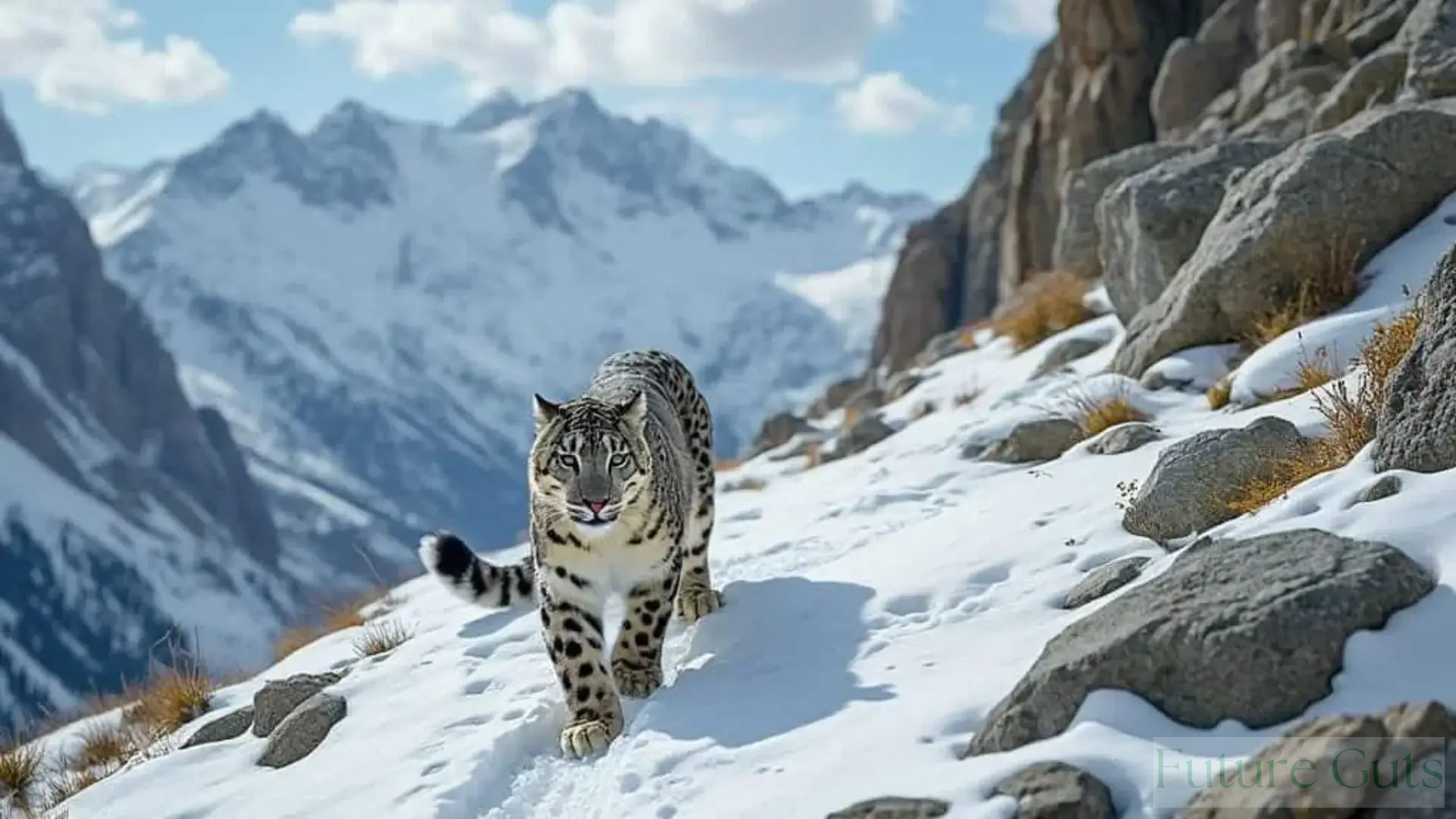

The Elusive Spirit of the Mountains
Snow leopards are among the most mysterious and awe-inspiring big cats on Earth, often referred to as the “ghosts of the mountains.” Living in some of the most remote and rugged landscapes, they inhabit high-altitude regions across Central and South Asia, including the Himalayas and surrounding mountain ranges. Their pale gray fur patterned with dark rosettes provides exceptional camouflage against rocky terrain, allowing them to move almost invisibly through their environment. Despite their strength and agility, snow leopards are rarely seen, making them symbols of wilderness and untouched nature.
Adaptations for Extreme Environments
Snow leopards are uniquely adapted to survive in harsh mountain ecosystems where temperatures can plunge well below freezing. Their thick fur insulates them against extreme cold, while their wide, fur-covered paws act like natural snowshoes, helping them move efficiently across snow and ice. A long, powerful tail provides balance on steep slopes and can be wrapped around the body for warmth while resting. These adaptations allow snow leopards to thrive in environments where few large predators can survive.
Role as Apex Predators
As apex predators, snow leopards play a crucial role in maintaining balance within mountain ecosystems. They primarily prey on wild mountain animals such as ibex, blue sheep, and other herbivores. By regulating prey populations, snow leopards help prevent overgrazing, which protects fragile alpine vegetation and reduces soil erosion. This balance supports healthy grasslands and water systems that millions of people downstream rely on for drinking water and agriculture.
Indicators of Ecosystem Health
Snow leopards are considered key indicators of ecosystem health. Their presence signals a stable food chain and intact habitat. When snow leopard populations decline, it often reflects broader environmental problems such as habitat degradation, declining prey numbers, or human pressure. Protecting snow leopards therefore helps conserve entire mountain ecosystems, including plant life, smaller wildlife species, and natural water sources.
Human–Wildlife Coexistence Challenges
Despite their ecological importance, snow leopards face ongoing challenges from human activity. As communities expand into mountain regions, habitat fragmentation and livestock grazing increase. When natural prey becomes scarce, snow leopards may hunt livestock, leading to conflict with local herders. These conflicts can result in retaliatory killings, further threatening already vulnerable populations. Finding solutions that support coexistence is essential for long-term conservation success.
Conservation Efforts and Community Involvement
Modern conservation efforts focus not only on protecting snow leopards but also on supporting the people who share their environment. Community-based programs promote livestock protection, compensation schemes, and sustainable land use practices. Education and awareness initiatives help local populations understand the ecological value of snow leopards, transforming them from perceived threats into symbols of natural heritage. International cooperation and scientific research also play a vital role in monitoring populations and preserving critical habitats.
Why Snow Leopards Matter Globally
Although snow leopards live in remote regions, their survival has global significance. Mountain ecosystems are vital sources of freshwater and biodiversity, and their health directly affects climate stability and human livelihoods. By protecting snow leopards, conservationists help safeguard these ecosystems and the natural services they provide. The snow leopard’s role as a guardian of mountain environments makes it one of the most important species for high-altitude conservation.
Conclusion
Snow leopards are far more than elusive predators; they are guardians of mountain ecosystems whose presence ensures balance, resilience, and ecological health. Their survival is closely tied to the well-being of fragile alpine environments and the communities that depend on them. Protecting snow leopards means preserving some of the world’s most vital and breathtaking landscapes, ensuring that these silent guardians continue to watch over the mountains for generations to come.

Other Articles

The Grand Duke Is Mine Spoilers: What to Expect
How to Attract Monarch Butterflies to Your Garden