




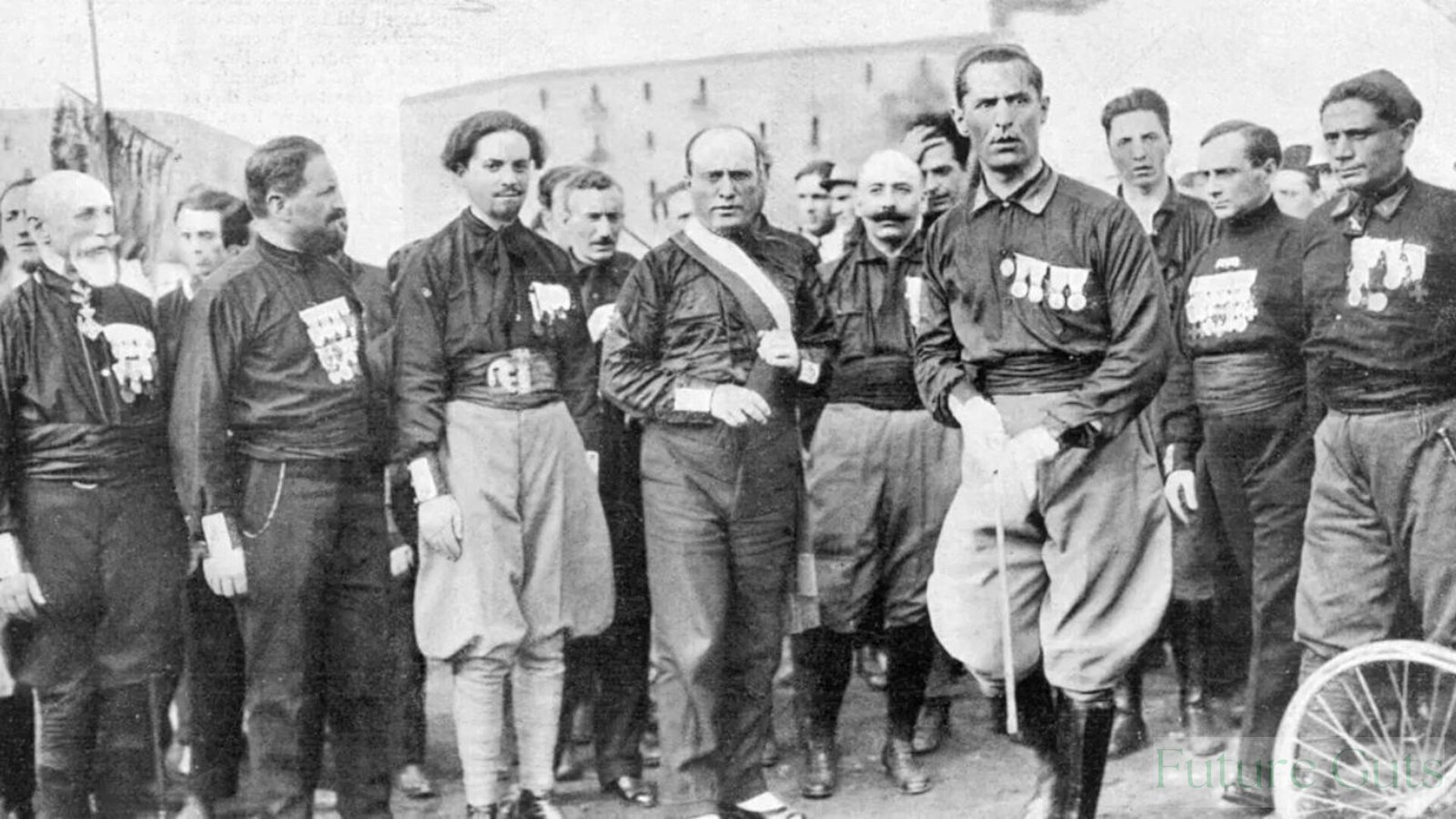

Fascisterne, the Danish term for fascists, refers to members and supporters of fascism, a far-right authoritarian political ideology that emerged in early twentieth-century Europe. Fascism developed in the aftermath of World War I, during a period marked by political instability, economic crisis, and widespread social unrest. Understanding the origins and ideological foundations of fascisterne requires examining the historical conditions that enabled fascism to rise, as well as the core principles that defined its worldview.
Historical Context After World War I
The end of World War I left much of Europe economically devastated and politically fractured. Countries such as Italy experienced inflation, unemployment, and dissatisfaction with the outcomes of the peace settlements. In this unstable climate, radical political movements gained traction by promising national revival and strong leadership. It was within this environment that fascism first took organized form under the leadership of Benito Mussolini in Italy.
Mussolini founded the Fasci Italiani di Combattimento in 1919, which later became the National Fascist Party. By 1922, following the March on Rome, Mussolini had consolidated power and established a fascist regime. The term “fascism” itself derives from the Latin word fasces, a bundle of rods symbolizing unity and authority in ancient Rome, reflecting the movement’s emphasis on strength through collective national identity.
Core Ideological Principles of Fascism
Fascism is defined by several interrelated ideological components. Central to fascist thought is ultranationalism, the belief that the nation is the highest and most important entity, deserving absolute loyalty. Fascisterne viewed national unity as essential and rejected liberal democratic systems, which they considered weak and divisive.
Authoritarian leadership is another key pillar. Fascist ideology promotes the idea of a single, powerful leader who embodies the will of the nation. This leadership model rejects pluralism and political opposition, favoring centralized control over institutions, media, and public life. Individual freedoms are subordinated to the perceived needs of the state.
Militarism and the glorification of violence also played significant roles in fascist ideology. War and struggle were often portrayed as natural and necessary for national strength. Fascisterne frequently emphasized discipline, order, and sacrifice as virtues required to restore national greatness.
Anti-Liberalism and Anti-Communism
Fascism arose partly in opposition to liberal democracy and socialism. Fascisterne rejected parliamentary systems, arguing that they led to fragmentation and inefficiency. At the same time, they strongly opposed Marxism and communism, which they believed threatened national unity through class conflict.
This dual rejection of liberalism and communism positioned fascism as a “third way,” claiming to transcend traditional left-right political divisions. In practice, however, fascist regimes eliminated democratic institutions and suppressed political dissent, consolidating power in the hands of the ruling party and its leader.
Economic and Social Foundations
Economically, fascist ideology supported a system often described as corporatism. Under this model, the state coordinated relationships between employers, workers, and professional groups to serve national interests. Private property was generally maintained, but economic activity was subject to heavy state direction and oversight.
Socially, fascisterne promoted traditional hierarchies and cultural conformity. The state played a central role in shaping education, youth organizations, and propaganda to cultivate loyalty and ideological alignment. National identity, cultural heritage, and collective pride were continuously emphasized to strengthen public support.
Expansion Beyond Italy
Although fascism originated in Italy, similar movements emerged in other European countries during the interwar period. The most notable example was National Socialism in Germany under Adolf Hitler, which shared many fascist characteristics but incorporated its own racial doctrines and policies. While each movement had distinct national features, they were united by authoritarianism, nationalism, and rejection of democratic governance.
The spread of fascist ideology contributed to rising tensions across Europe and played a significant role in the events leading to World War II. After the war, fascism was widely discredited due to its association with dictatorship, repression, and large-scale conflict.
Legacy and Contemporary Relevance
Today, fascism is broadly studied as a historical ideology with profound global consequences. The term “fascist” is sometimes used in modern political discourse, but scholars emphasize the importance of distinguishing between historical fascism and contemporary political movements. Academic research continues to examine the social, economic, and psychological conditions that allowed fascism to gain support in the early twentieth century.
Understanding fascisterne and their ideological foundations is essential for analyzing how authoritarian movements develop and how democratic institutions can be challenged during times of crisis.
Conclusion
Fascisterne emerged from a period of deep political and economic instability in post–World War I Europe. Rooted in ultranationalism, authoritarian leadership, anti-liberalism, and militarism, fascism sought to replace democratic systems with centralized state control and a unified national identity. While its historical consequences were severe and far-reaching, studying its origins and ideological foundations remains crucial for understanding both twentieth-century history and the broader dynamics of political extremism.

Other Articles

Sodziu Optimization Guide: Improve Your Experience
Oronsuuts Explained: Meaning, Features & Uses