




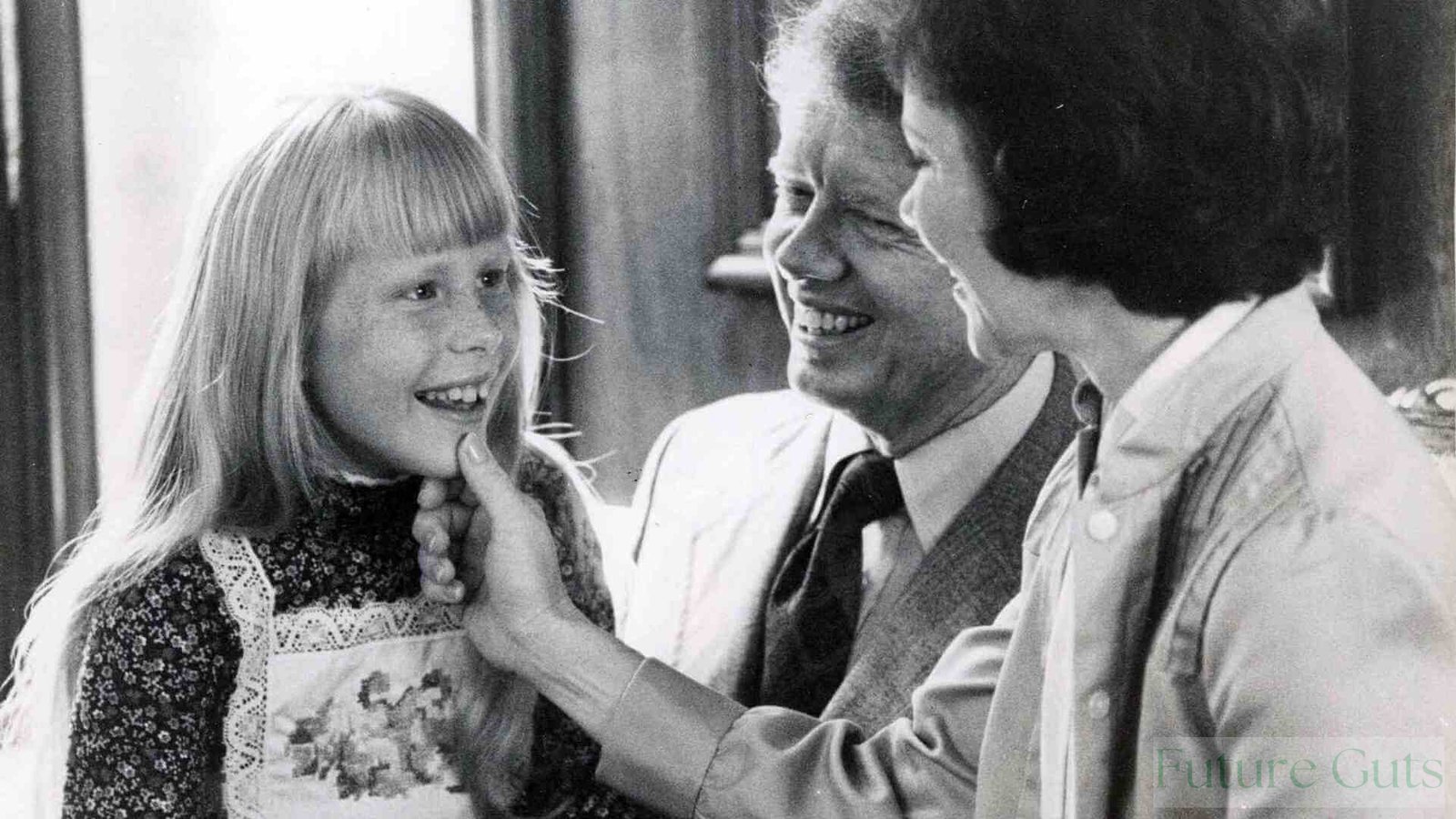

Amy Carter is best known as the youngest child of former U.S. President Jimmy Carter, but her life extends far beyond her years in the White House. Unlike many presidential children who later pursue public office or high-profile careers, Amy Carter chose a quieter path centered on education, activism, and personal values. Her story reflects a unique balance between historical visibility and deliberate privacy.
Early Life and White House Years
Amy Carter was born on October 19, 1967, and became one of the youngest children to live in the White House when her father assumed the presidency in 1977. Growing up in such a public environment placed her under constant media attention, yet her parents made conscious efforts to provide as normal a childhood as possible. She attended public school in Washington, D.C., which was unusual for a president’s child at the time and reflected the Carter family’s emphasis on equality and humility. During these years, Amy became a symbol of a more down-to-earth presidential family, often seen at public events in a way that humanized the presidency.
Education and Intellectual Development
Following her years in Washington, Amy Carter focused strongly on academics. She attended Brown University and later transferred to the Memphis College of Art before completing her studies at Tulane University. Her educational journey reflected a broad range of interests, including art, literature, and critical social thought. Rather than leveraging her family name for career advancement, Amy prioritized intellectual growth and personal exploration, reinforcing her preference for substance over public recognition.
Political Awareness and Activism
Amy Carter became politically aware at a young age, influenced by her parents’ deep commitment to human rights and social justice. In her youth and early adulthood, she participated in protests and political demonstrations, particularly those related to U.S. foreign policy and nuclear disarmament. While her activism sometimes drew criticism due to her status as a former first daughter, it also highlighted her willingness to stand by her beliefs regardless of public opinion. Her actions reflected a continuation of the Carter family’s values rather than an attempt to seek attention.
Professional Life and Personal Choices
In adulthood, Amy Carter deliberately avoided a high-profile career. She worked in roles related to education and writing and collaborated with her father on projects, including a children’s book that promoted social awareness and empathy. Her professional choices consistently aligned with her desire for a private, meaningful life rather than one driven by fame. This restraint has often been cited as a defining aspect of her character.
Relationship With the Carter Family Legacy
Amy Carter’s legacy is closely tied to, yet distinct from, that of her parents. While Jimmy Carter is celebrated globally for his presidency and humanitarian work, Amy represents a quieter extension of those principles. She has supported initiatives connected to human rights, education, and peace, often away from public attention. Her life demonstrates how the influence of a presidential family can be expressed through values and actions rather than titles or authority.
Conclusion
In conclusion, Amy Carter’s life reflects a thoughtful departure from the traditional expectations placed on presidential children. From growing up in the White House to choosing a private, values-driven adulthood, she has consistently emphasized integrity, education, and social responsibility. Her legacy is not defined by political power or public office, but by her commitment to living authentically and upholding the humanitarian ideals instilled in her from childhood.

Other Articles

10 Easy Healthy Recipes for Busy Weeknights
7 Iconic Moments in Golden State Warriors History