



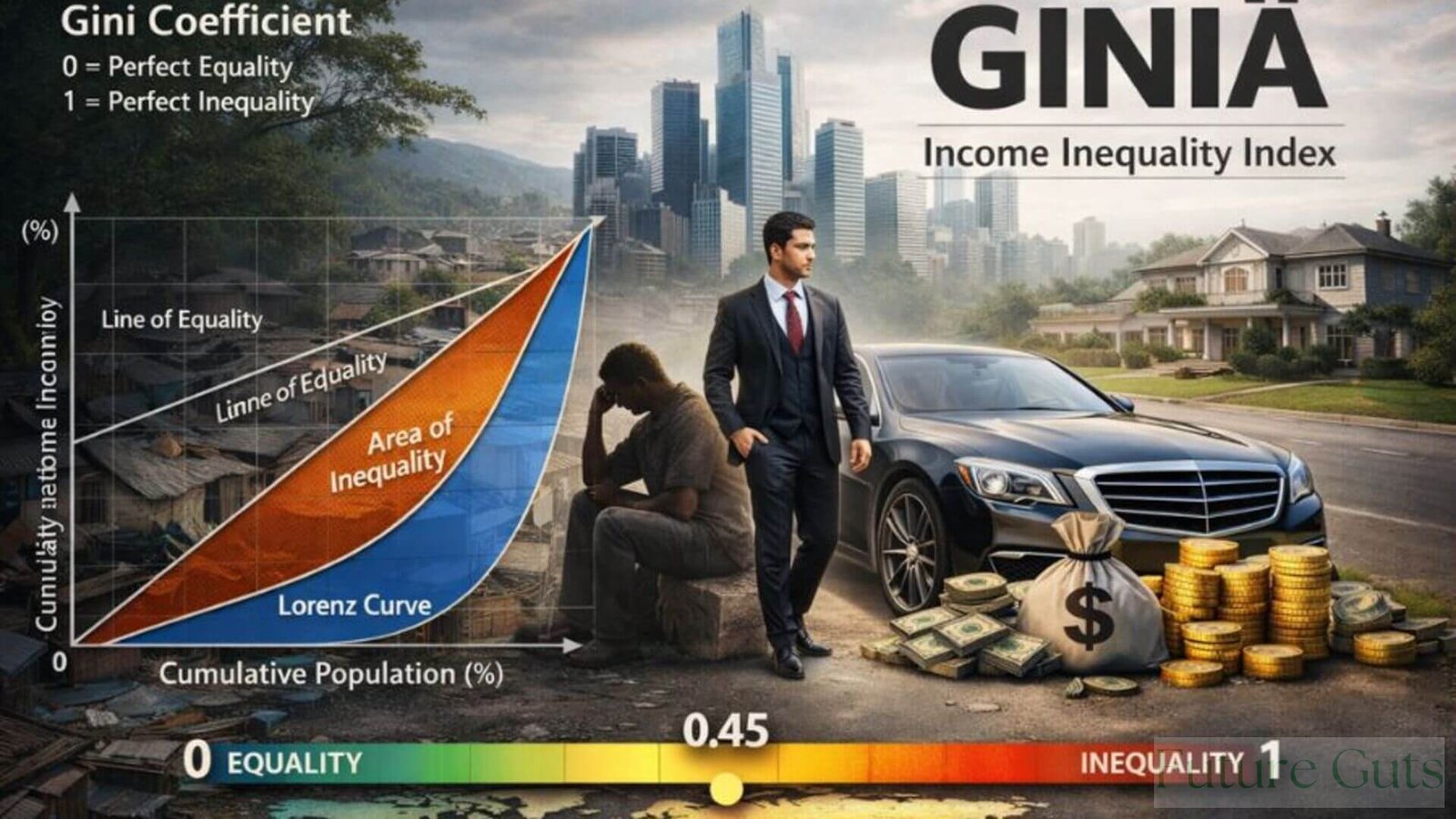

The term Giniä is increasingly discussed in conversations related to economic inequality and wealth distribution. Although the spelling may vary depending on context, the concept is closely associated with the Gini coefficient, a widely used statistical measure that evaluates how evenly income or wealth is distributed across a population. In 2026, understanding this concept has become particularly important as governments, economists, and policymakers examine rising inequality and its impact on economic stability and social development.
Understanding the Meaning of Giniä
Giniä generally refers to the idea behind measuring inequality within a society. The concept originates from the work of Corrado Gini, who introduced a mathematical formula in the early twentieth century to quantify disparities in income distribution. The resulting measurement, commonly called the Gini coefficient, produces a value between zero and one. A value close to zero indicates near-perfect equality, meaning income is distributed evenly across the population, while a value closer to one suggests extreme inequality where a small portion of the population controls a large share of income or wealth.
In modern economic discussions, Gini-related metrics are used to analyze national economies, compare inequality levels between countries, and observe long-term trends in wealth distribution. Because inequality affects economic growth, social mobility, and political stability, the measurement has become a key analytical tool for policymakers and researchers.
How the Gini Coefficient Works
The Gini coefficient is derived from the relationship between the actual distribution of income and a theoretical state of perfect equality. Economists often visualize this through the Lorenz curve, which plots cumulative income share against cumulative population share. The greater the gap between the Lorenz curve and the line of perfect equality, the higher the inequality level.
In practical terms, the metric helps translate complex economic data into a single number that can be easily compared across countries and time periods. Governments and organizations frequently use this measure to evaluate economic policies, monitor social welfare programs, and assess whether growth benefits are reaching different segments of society.
Why Giniä Matters in the Modern Economy
In 2026, the concept behind Giniä remains highly relevant because inequality continues to shape global economic debates. Technological change, automation, globalization, and shifts in labor markets have significantly influenced income distribution. While economic growth has lifted millions of people out of poverty worldwide, wealth concentration in certain regions and industries has also increased.
By examining inequality through metrics such as the Gini coefficient, economists can better understand whether prosperity is shared broadly or concentrated among a limited group. These insights help governments design policies related to taxation, social protection, education, and employment opportunities.
Global Trends in Inequality
Different countries display widely varying levels of inequality. Some nations with strong social welfare systems maintain relatively lower Gini scores, indicating more balanced income distribution. In contrast, other economies with weaker redistributive policies often show higher inequality levels.
International organizations frequently analyze inequality trends to identify patterns in economic development. Rising inequality can affect economic stability, reduce consumer spending power among lower-income groups, and create long-term social challenges. For this reason, monitoring inequality has become a central part of economic research and policy discussions worldwide.
Economic and Social Implications
The importance of Gini-related analysis extends beyond simple statistical measurement. Income inequality can influence access to education, healthcare, housing, and employment opportunities. When disparities become too large, they may hinder social mobility and limit opportunities for future generations.
Researchers also note that extreme inequality may reduce trust in institutions and contribute to social tensions. Conversely, more balanced income distribution can support stronger economic participation and a healthier middle class, which often acts as a stabilizing force in national economies.
The Role of Policy and Economic Reform
Governments use inequality indicators to evaluate whether their policies are effectively supporting inclusive growth. Measures such as progressive taxation, investment in education, and expanded social safety nets can influence income distribution over time. While no single metric fully captures the complexity of economic inequality, the Gini coefficient remains one of the most widely recognized tools for monitoring these changes.
As policymakers in 2026 continue to focus on sustainable development and economic resilience, inequality metrics help guide decisions that aim to balance growth with fairness.
Conclusion
Giniä, closely linked to the concept of the Gini coefficient, represents a critical framework for understanding income inequality in modern economies. By providing a clear way to measure how wealth is distributed within a society, it helps economists and policymakers identify trends, evaluate policies, and address economic disparities. In an era where global economic systems are rapidly evolving, the ability to measure and interpret inequality remains essential for building more inclusive and sustainable societies.

Other Articles

Crocolini: A Modern Green Vegetable Guide
Labarty: Technology & Digital Innovation Hub