




What Are Nahttypen and Why They Matter
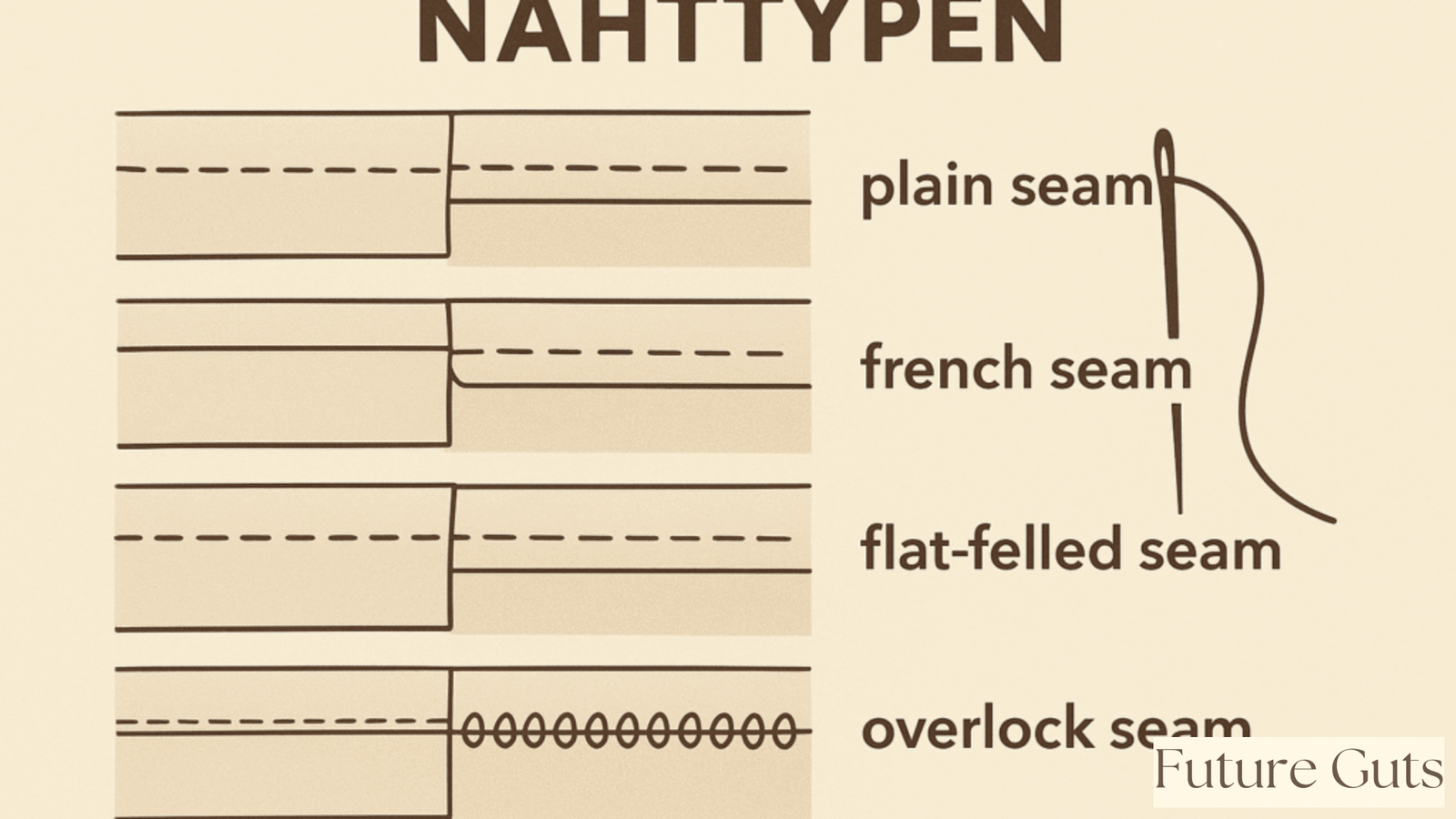
Nahttypen is the German term for seam types used in sewing and garment construction. Each seam type serves a specific purpose depending on fabric weight, garment use, durability requirements, and visual finish. Understanding Nahttypen techniques is essential for creating clothes that not only look professional but also last longer and feel comfortable when worn. The correct seam choice can prevent fraying, improve strength, and enhance the overall structure of a garment.
Step 1: The Plain Seam (Geradnaht) as the Foundation
The plain seam is the most basic and widely used Nahttyp. It is created by placing two fabric pieces right sides together and stitching along the seam line. This seam forms the foundation for most garments and is easy to sew and modify. However, because raw edges are exposed, it usually requires a finishing technique such as zigzag stitching or overlocking to prevent fraying, especially on woven fabrics.
Step 2: French Seam for Delicate Fabrics
The French seam is a refined Nahttyp commonly used for lightweight and sheer fabrics. It encloses raw edges completely, resulting in a clean and elegant finish on the inside of the garment. The process involves sewing the fabric first with wrong sides together, trimming the seam allowance, then folding and sewing again with right sides together. This technique improves comfort and durability while maintaining a neat appearance.
Step 3: Flat-Felled Seam for Strength and Durability
The flat-felled seam is a strong and durable Nahttyp often seen in jeans, workwear, and shirts. It involves folding and stitching the seam allowance so that raw edges are fully enclosed and the seam lies flat against the fabric. This technique provides excellent strength and resistance to wear, making it ideal for garments that experience frequent stress and movement.
Step 4: Lapped Seam for Thick or Non-Fraying Materials
Lapped seams are commonly used for leather, denim, and heavy fabrics. Instead of placing fabric edges together, one piece overlaps the other and is stitched in place. This Nahttyp is especially useful for materials that do not fray or are too thick for enclosed seams. It offers a bold, visible finish and strong structural support.
Step 5: Overlocked Seam for Clean and Fast Finishing
An overlocked seam is created using a serger or overlock machine, which trims and encloses raw edges in one step. This technique is widely used in ready-to-wear garments due to its speed and neat appearance. Overlocked seams are ideal for knit fabrics and garments that require flexibility, as they allow the seam to stretch without breaking.
Step 6: Decorative Seams for Design and Structure
Some Nahttypen serve both functional and decorative purposes. Decorative seams are often used as visible design elements, adding structure or visual interest to garments. These seams may include topstitching or contrast thread and are carefully placed to enhance the garment’s silhouette while maintaining durability.
Choosing the Right Nahttyp for Your Project
Selecting the appropriate seam type depends on fabric choice, garment function, and desired finish. Lightweight fabrics benefit from enclosed seams like French seams, while heavy-duty garments require stronger options such as flat-felled or lapped seams. Understanding these techniques allows sewists to make informed decisions that improve both appearance and performance.
Common Mistakes to Avoid When Using Nahttypen
A frequent mistake is using the wrong seam type for the fabric, which can lead to discomfort or premature wear. Another issue is neglecting seam finishing, especially with plain seams on woven fabrics. Taking time to match the Nahttyp to the material and purpose of the garment prevents these problems and improves overall quality.
Conclusion
Nahttypen techniques are the backbone of quality sewing and garment construction. From simple plain seams to durable flat-felled seams and elegant French seams, each technique plays a specific role in shaping how a garment looks and performs. By understanding and applying the right Nahttypen step by step, sewists can create clothing that is stronger, more comfortable, and professionally finished.


How to Prepare Yalla Choy: A Complete Guide
10 Common Mistakes in Scrying Mirrors